

A practice for collective agency
Live experiments to rehearse the future together
Many of us can see what needs to change. What's hard is knowing where to begin.What if we could try ways of moving together before we have everything figured out?Rooted in place. Remixed everywhere.

The invitation
First step reveals the next
The questions we're facing today no longer belong to one organisation, one discipline, or one community.They spill across boundaries and keep shifting as we engage with them. And they've become so large that they overwhelm us, our institutions, and the ways we've relied on to make sense of change.We know we need to respond differently.
But where do we begin?With small first moves.
In person, in place, with others.Something changes when people experience acting with others, even briefly, imperfectly.Not only what they understand, but how they relate to their own capacity. What felt like someone else's problem becomes a shared question. What felt overwhelming becomes something they can start to influence, even a little, from where they are.The starting point is not despair at the scale of what's happening, but curiosity about what we might discover once we make a first move, before we feel ready.
What practices make beginning easier? That's the question we explore here.
Which path are you curious to follow?
Some people arrive here carrying questions about how change can begin.Others, because they want to start experimenting in their own context. Choose your path, or wander between them.

Inside the practice
Why experiments
Designing conditions
From roots to systems
Prometheus Protocol
Living Commons
Case studies
Field notes
Open protocols
What we're learning
Host an experiment
Growing the commons
Ways in
Who we work with
Stewarding the practice
Past collaborations
Built with care in Europe.
© 2026 Collective Futures
About Collective Futures
Practising collective experimentation
Collective Futures designs repeatable practices where communities, networks and institutions discover new ways of acting together.Drawing on enduring social technologies like theatre, storytelling, play, collective crafting, ritual and shared reflection, the practice remixes them into contemporary civic experiences that people choose to repeat, adapt, and carry forward.Through experiments, rehearsals, protocols, and living commons, Collective Futures explores the question:How do practices become culture?

A hypothesis
We are living on a threshold.
There are moments when the old ways no longer seem enough, but the new ones haven't settled into a shape yet.We believe we're living through one of those moments. Ecological breakdown, extreme wealth concentration, democratic erosion, artificial intelligence, loneliness, new forms of participation, new forms of power.
The future may require new institutions.
It will surely require rediscovering very old human practices.
For thousands of years, people learned to navigate uncertainty together long before they built formal systems.
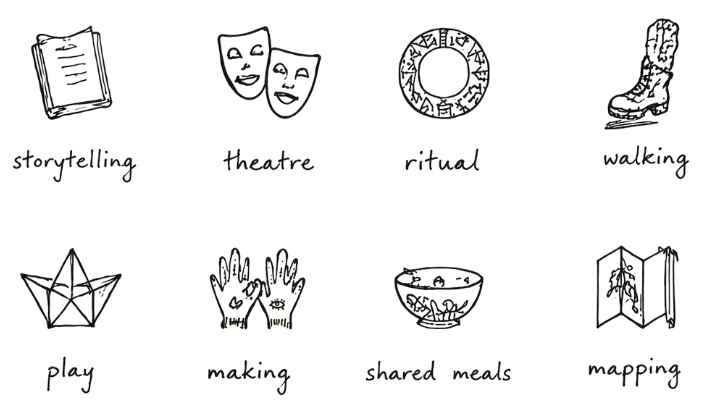
They gathered around stories, rehearsed difficult choices through theatre, and marked transitions with rituals. They walked landscapes together and mapped what mattered. They shared meals, and made things with their hands.
These aren't just traditions, they are social technologies. Ways of learning, deciding, remembering, and acting together.
Many are still with us. Many have been forgotten. Many are waiting to be remixed.
Collective Futures doesn't invent practices from scratch. It studies, remixes and tests them.We ask what happens when they are reimagined for the transitions we're living through today.Not as one-off experiences, but as practices people choose to repeat, adapt, and carry into new places.
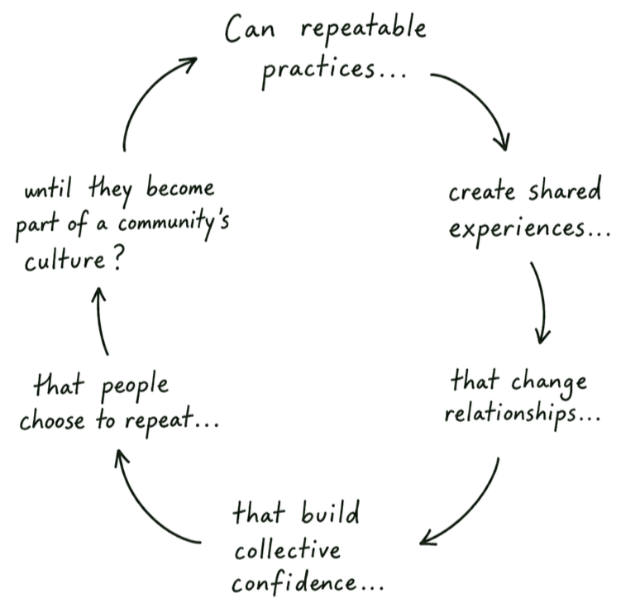

Every experiment,
every civic rehearsal,
every collaboration,
every protocol,
is another opportunity to learn with others.Not to prove a theory, but to observe a pattern.

What we're designing
Not projects.↓
Practices.
Not replication.↓
Adaptation.
Not participation.↓
Shared ownership.
Not interventions.↓
Living culture.
Some practices remain local.Some travel.The most interesting ones stop belonging to us altogether.That's when we know they're alive.
You might recognise this moment.
Different contexts, similar moments.
This is often where the practice can help.
Does any feel familiar to you?

A question is gathering people.It might be about housing, climate, economic democracy, AI. People care, conversations are happening, and new people keep joining.You're not looking for more experts, but for a shared way of creating what comes after conversation.

Your network is ready for more than connection.Relationships already exist, along with knowledge, trust, and willingness to contribute.But collaboration still depends on the same handful of people and the same kinds of meetings.You're looking for a practice that helps ideas travel, and new initiative and leadership to emerge across the network.

You're helping others respond to change.You might work in a foundation, municipality, university, intermediary organisation, or membership network.Your role isn't to solve every challenge yourself, but to create conditions where others can respond, contribute, and lead.You want to create momentum without prescribing the outcome.

A question keeps returning.It might be an idea you can't stop thinking about, or a conversation that refuses to end. Or the feeling that waiting for a better moment no longer makes sense.You're not looking for a blueprint, but for a place to begin.

Inside the practice
Why experiments
Designing conditions
From roots to systems
Prometheus Protocol
Living Commons
Case studies
Field notes
Open protocols
What we're learning
Host an experiment
Growing the commons
Ways in
Who we work with
Stewarding the practice
Past collaborations
Built with care in Europe.
© 2026 Collective Futures
Ways of seeing
A way of paying attention
The experiments you will find around here are shaped by a particular way of understanding change.Some of these ideas have been tested repeatedly across years of practice, in different places and contexts. Others are newer and still unfolding.Together, they form a living body of practice: part accumulated experience, part ongoing inquiry.Think of these ideas more as cairns than instructions: markers left by previous journeys, offered for orientation, not certainty.Take what is helpful. Reinvent the rest.

The practice
Designing conditions for emergence
Collective agency can't be delivered, or invoked into being. But it can be experienced. Felt, not debated.Important change often feels surprising, relational, and emergent from the inside. So the question is not how to engineer change, but how to create conditions in which new possibilities can emerge.Six principles shape how we design, host, and carry experiments. They are a way of paying attention, not a methodology.

What experiments can unlock
New pathways become visible.
The future begins to branch.↓
Why experiments
Experiments are how we learn our way forward in uncertainty.Instead of searching for the right answer, they create opportunities to discover through doing.
What they leave behind
Experiments often create new actors.Participants become hosts. Neighbours become collaborators. Strangers become organisers.An experiment may leave behind:
a relationship
a practice
a protocol
a shared narrative
a group that didn't exist before
a question people decide to keep pursuing
From experiments to ecologies
Many experiments remain modest in scale. They don't need to become programmes or organisations to matter.Sometimes, something begins to travel.People facing similar questions discover one another across places. Practices are adapted, not replicated. What emerges is not a model to scale, but a growing ecology of practice.
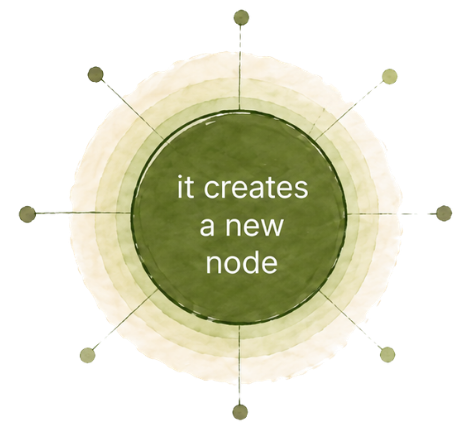

Perhaps this is how systemic change happens: not through one scaled solution, but through many rooted experiments, connected across places.
From roots to systems
Big questions,
local starting points
The forces reshaping society, ecological breakdown, wealth concentration, AI, feel too big and too distant, beyond influence.Yet people experience them close to home every day: in neighbourhoods, livelihoods, and relationships.Places matter because it's where the stakes are real. It's also where there is trust, practical knowledge, and willingness to act, the kind of resources no intervention can import.And where people can still gather to make sense of change, get creative, and build things together.No single place has the answer, but when communities connect, patterns and possibilities become contagious.
Inside the practice
Why experiments
Designing conditions
From roots to systems
Prometheus Protocol
Living Commons
Case studies
Field notes
Open protocols
What we're learning
Host an experiment
Growing the commons
Ways in
Who we work with
Stewarding the practice
Past collaborations
Built with care in Europe.
© 2026 Collective Futures
Inside the practice
Rather than offering one method, we compose a family of practices. Each explores a different part of the same question.
Experiments
Experiments in motion
Examples of how real tensions become live prototypes across fields and scales.You might also read these as a progression: from making systems visible, to rehearsing public power, to acting locally, to building shared capacity across places.


Making sense of AI systems
From opacity
to civic leverage
AI systems increasingly shape public life, yet citizens and communities rarely have meaningful opportunities to influence how they are designed or governed.
Short participatory inquiries that map how AI operates in a local context, where power concentrates, and what alternatives might exist.
Shared understanding, visible leverage points, and greater public capacity to participate in shaping technological futures.
Rehearsing public power over AI
From overwhelm
to practised response
Institutions, communities, and civic actors often recognise emerging risks, but complexity makes collective action difficult.
The Prometheus Protocol invites participants to rehearse action together through fictional but structurally honest scenarios about AI, power, and democratic agency.
Shared language, practical interventions, new alliances, and first experiences of acting collectively under uncertainty.
Explore Prometheus →
Mobilising what's already here
From latent assets
to visible tools
Communities hold relationships, skills, stories, and resources that often remain invisible or disconnected.
Asset-mapping labs and collective design processes that surface existing capacities and transform them into practical initiatives.
New collaborations, stronger local ecosystems, and practical infrastructures rooted in what people already have.

Building ecosystems of practice
From isolated efforts
to learning ecologies
Good ideas travel because they become practices, and practitioners often lack spaces for reflection, adaptation, and peer learning.
Communities of practice, learning journeys, and open documentation processes that enable experimentation to spread across places.
Learning ecosystems that continue evolving long after individual projects have ended.
What this practice is exploring
We're interested not only in moments of participation, but in what remains after.
These questions guide the design of the experiments, partnerships and field-building work you'll find here.These questions are approached through practice: by designing experiments, observing what emerges, documenting patterns, and sharing what is learned along the way.
How do participants become new nodes who convene and connect?
How do local experiments become enduring civic practices and rituals?
How do practices travel across places without becoming blueprints?
How to connect the dots between pockets of collective creativity?
And how might today's experiments become part of the civic infrastructure communities need for the future?
In practice
Prometheus Protocol 🔥
Live rehearsal on AI, power, and democratic imagination
A civic rehearsal format where people move from observing systems to stepping into them.The Prometheus Protocol invites participants to experience what it feels like to act together on questions about AI and power that are increasingly shaping public life without meaningful public participation.
How it works
Inspired by Forum Theatre, participants enter credible fictional scenarios, freeze the scene at the moment of maximum tension, and test different ways of intervening from inside the situation itself.The point is not to “solve” the scene, but to rehearse participation under real constraints: pressure, uncertainty, conflicting interests, institutional inertia, uneven power.
Previous iterations
| Place | Context | Date |
|---|---|---|
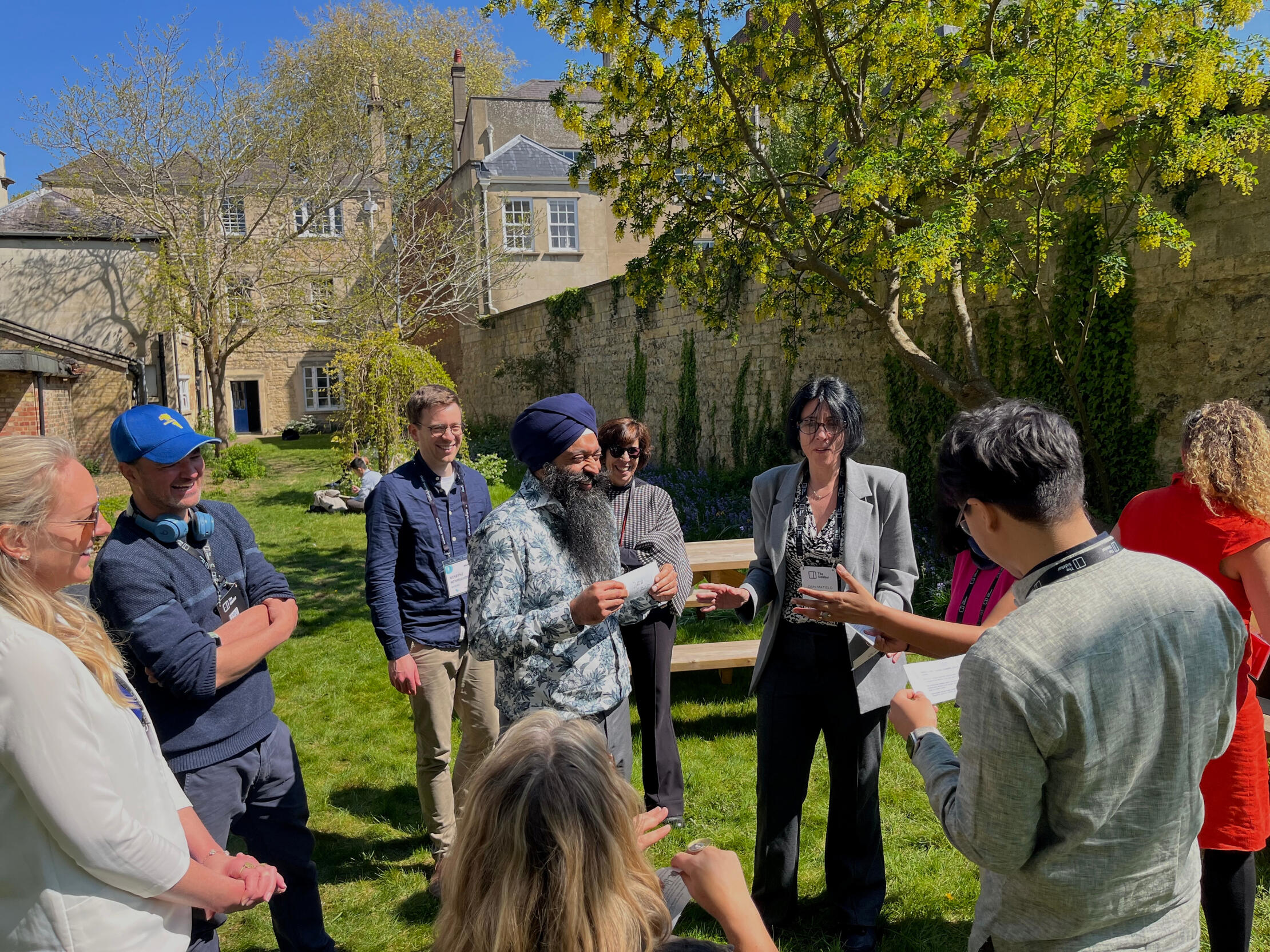
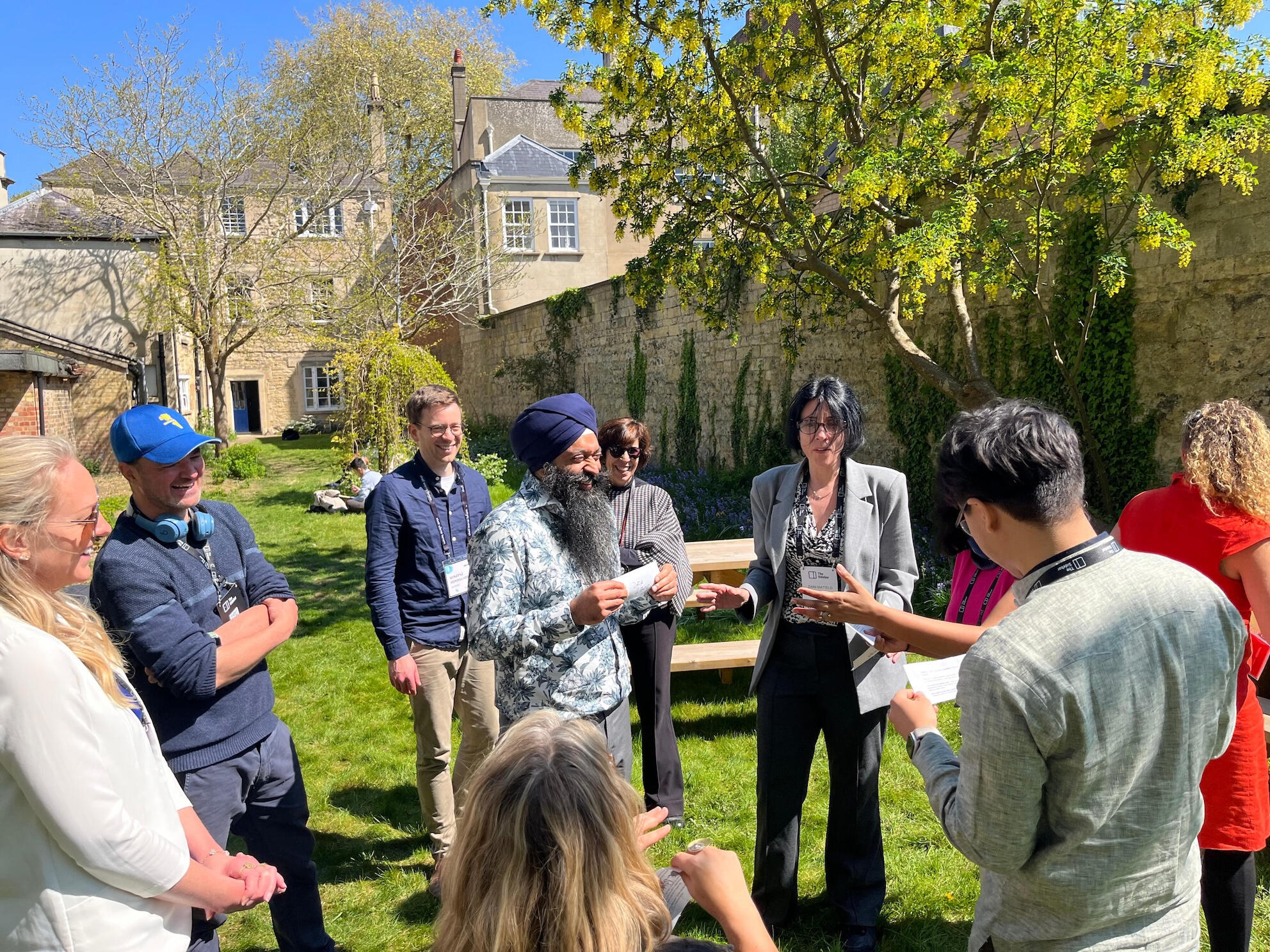
| Oxford, UK | The Sidebar | April 2026 |
| São Paulo, Brazil | Jornada IA para Impacto | May 2026 |
| Coimbra, Portugal | Public gathering | May 2026 |
Next iteration
Sibiu, Romania – 9 July 2026, 18:00 EEST
How it travels
Each iteration is documented openly.The interventions people attempt inside the scenes, the tensions that repeatedly surface, the unexpected framings participants generate, and the practical moves that feel possible afterwards all become part of a growing commons: a living record of civic ingenuity across contexts.The scenes, facilitation materials, and learnings from each edition are shared openly so participants and partners can adapt, remix, and carry the protocol into their own communities and contexts.

Bring Prometheus to your context
Prometheus can be adapted for communities, public institutions, universities, foundations, and civic networks exploring questions of AI, power, and democratic agency.
What begins as a small experiment can ripple far beyond where it starts.
Inside the practice
Why experiments
Designing conditions
From roots to systems
Prometheus Protocol
Living Commons
Case studies
Field notes
Open protocols
What we're learning
Host an experiment
Growing the commons
Ways in
Who we work with
Stewarding the practice
Past collaborations
Built with care in Europe.
© 2026 Collective Futures
Zoom in
Prometheus Protocol 🔥
A civic rehearsal for collective agency in the age of AI.
Most people encounter Al as something already decided. The tools arrive. The systems are adopted. The decisions have already been made.Prometheus creates a different experience.
Participants step into live scenarios where decisions about AI, power, ownership and public value are still unfolding, and rehearse what collective agency feels like before those decisions become inevitable.

The question
AI is reshaping public life
Who owns the infrastructure? Who captures the value?
Who decides what enters schools, hospitals, local governments and civic institutions?These choices are often presented as technical decisions. But they are also political, economic and democratic ones. They need public participation.The Prometheus Protocol explores how ordinary people might regain a sense of agency within these systems.
It asks three questions:
Who owns?
Who benefits?
Who decides?
What we explore
AI is not only about technology. It is becoming infrastructure.
Artificial intelligence is increasingly shaping how resources are allocated, how public services operate, how knowledge is produced, and whose interests are prioritised.Yet many of the most consequential decisions about AI are being made without meaningful public participation.Prometheus explores questions such as:
Who owns the data, models, and infrastructure increasingly shaping public life?
How is value created through AI, and who captures it?
What happens when public institutions depend on private technological infrastructures?
What alternative models of ownership, governance, and stewardship might exist?
How can communities, workers, public institutions, and civil society regain influence over technological futures?
The protocol does not seek definitive answers.Instead, it creates spaces where people can collectively explore these questions, surface tensions, rehearse interventions, and imagine alternatives together.
Themes explored so far
Different iterations have explored questions such as:
Community ownership of data
AI in public services
Public procurement and technological dependence
Democratic oversight of AI systems
Alternative ownership and governance models
Civic participation in technological decision-making
Local economic value and digital commons
How it works
A protocol for collective experimentation
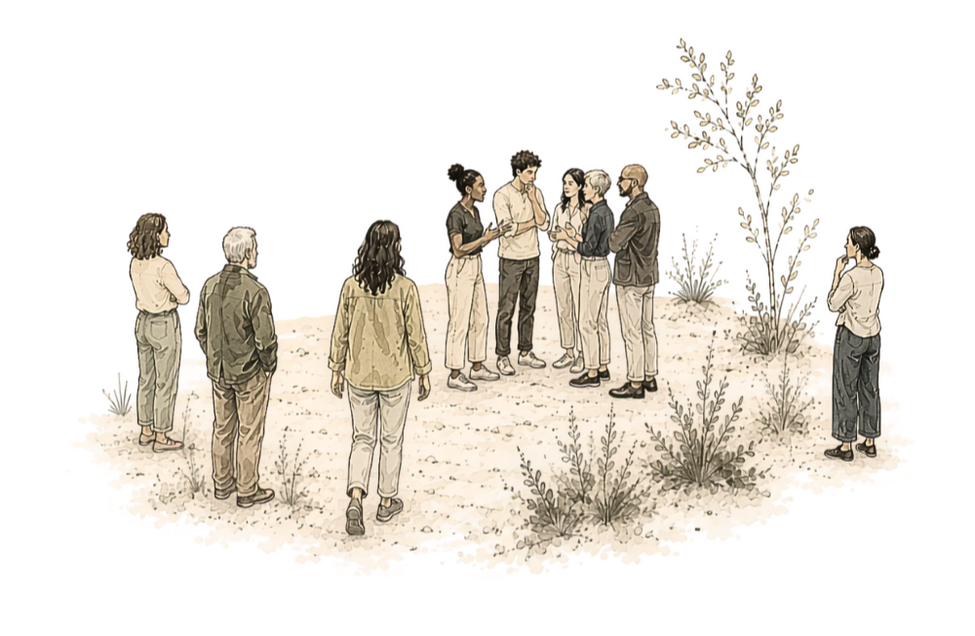
A small group of people of different ages and life experiences gathers in a local spot, maybe a park, a library, a museum.They are there for a sort of improv theatre. A scene gets read and some roles are offered, with a few lines to start. The rest is what they make of it. And what happens is always interesting.
Making decisions from inside
Inspired by Forum Theatre, participants enter credible fictional scenarios rooted in real tensions around AI, power, and democratic agency.Together, they freeze the scene at moments of maximum tension and test different ways of intervening from inside the situation itself.The point is not to solve the scene, but to rehearse participation under real constraints: pressure, uncertainty, conflicting interests, institutional inertia, and uneven power.
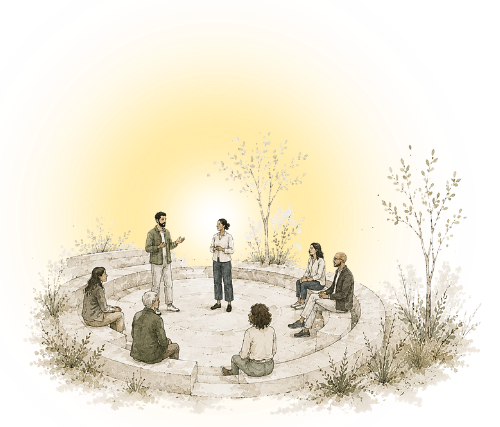
1. Enter the story
Participants encounter a fictional but plausible situation rooted in real tensions. Some volunteer to play a role. Others observe.

2. Freeze the moment
The facilitator freezes the scene at a point of maximum tension. An invitation is made to the audience: who wants to step in?
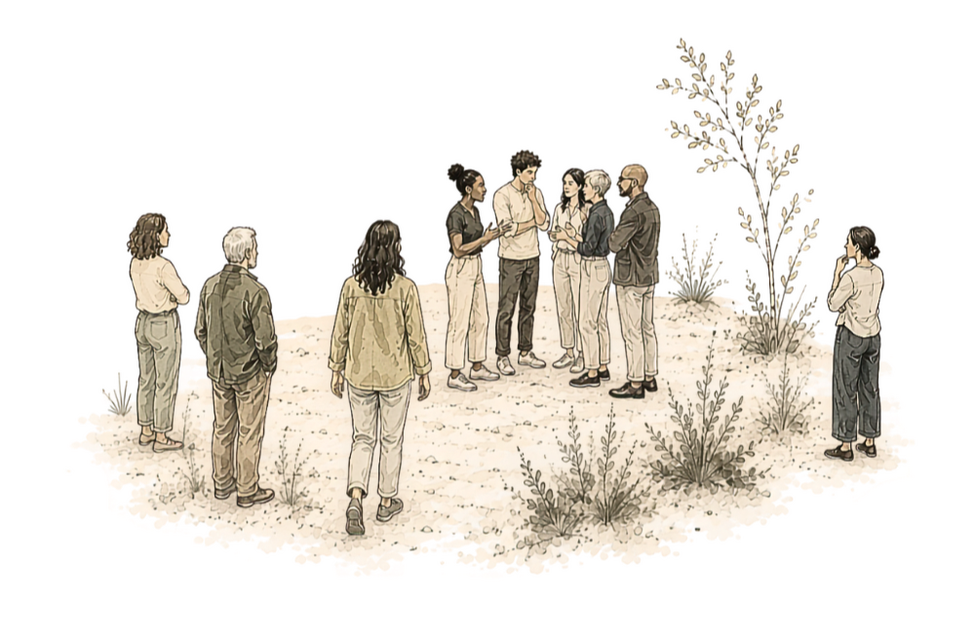
3. Step in
Participants replace characters and test different interventions from inside the situation itself. The goal is not to 'solve' the scene, but to discover what else becomes possible.

4. Debrief
Together, participants reflect on what emerged, what constrained action, and what might translate into real life.
What emerges
As people step into the scenes, new possibilities begin to surface. Shared language emerges. Unexpected alliances appear. New proposals break through deadlocks.Participants leave not only with analysis from the debrief, but with an embodied experience of how power and constraint operate in practice, and a clearer sense of where leverage, initiative, and collective action might begin from where they are.They also encounter alternative infrastructures, governance models, and ownership approaches that challenge the idea that the current direction of AI is inevitable.
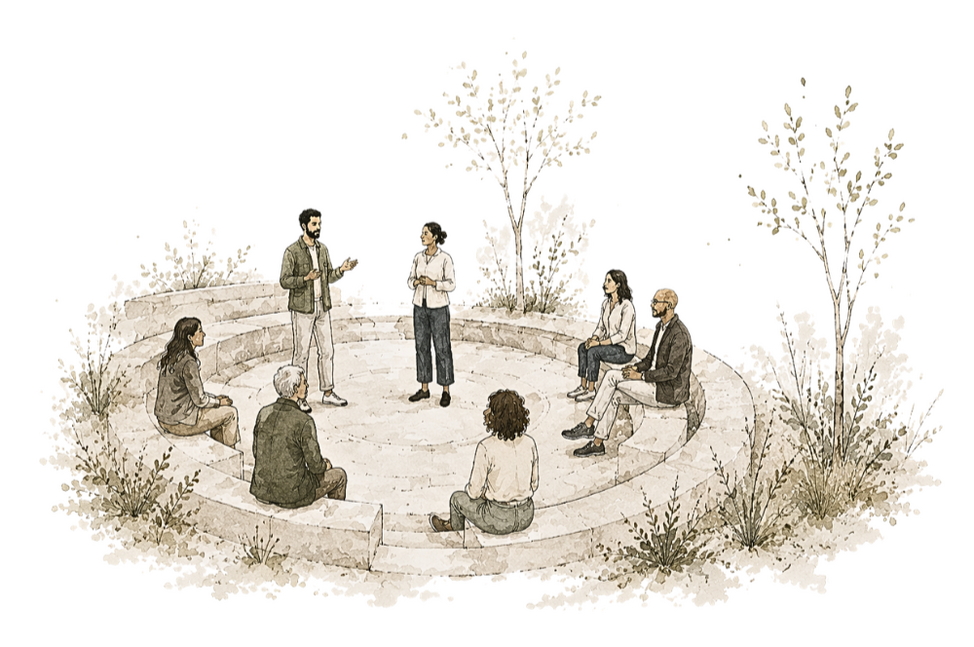
Naming the stakes
Language for conversations that felt inaccessible. Understanding happens by embodying a role.

Seeing the system
Power dynamics and structures that shape decisions become visible. Acting differently can change the constellation, and open new possibilities within real constraints.
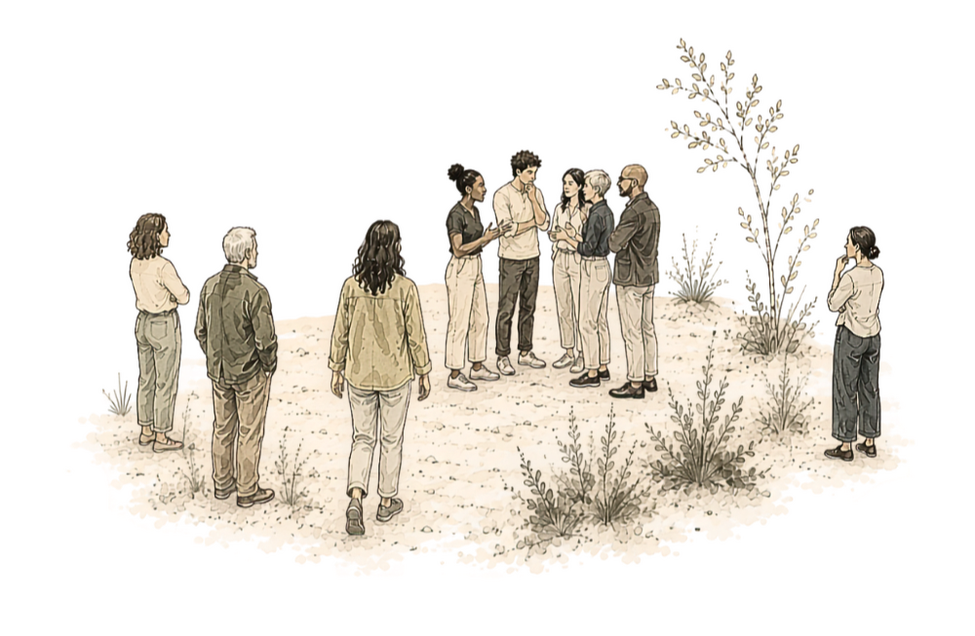
Discovering alternatives
Next to the emergent strategies and the collective intelligence surfaced through the rehearsal, participants also learn about alternatives that exist or are being built.

Taking action
Many leave asking:"What's next?"
And then,
sometimes,
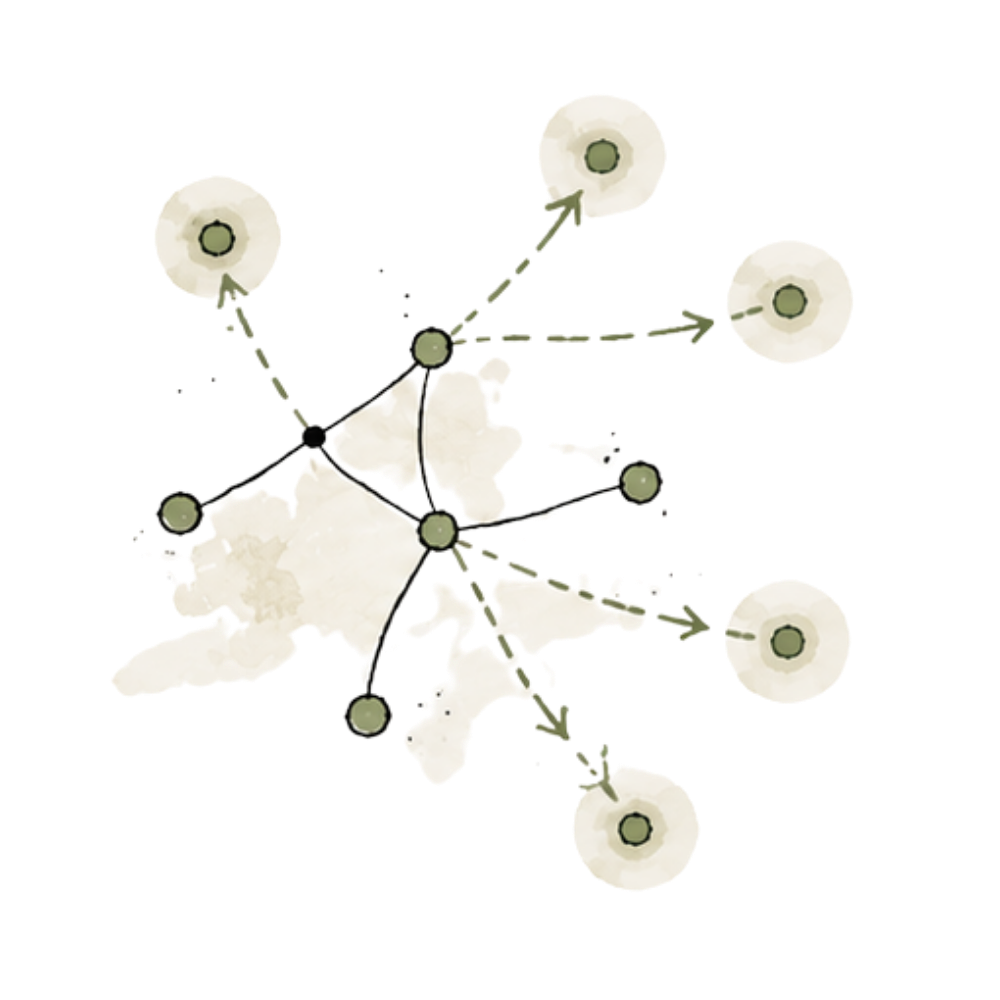
something travels.
The rehearsal is rarely the end of the story.A conversation continues. A relationship forms. A new experiment begins. Someone hosts a session of their own. An idea finds a new context.Sometimes the most important thing is not what happens in the room, but what travels beyond it.
The lineage of this practice
From forum theatre to AI governance
Prometheus draws inspiration from Augusto Boal's Forum Theatre, Paulo Freire's traditions of critical consciousness, participatory futures, democratic innovation, and systems change practice.At its core lies a simple proposition:People develop agency not by discussing change from a distance, but by experiencing it together.
Prometheus adapts these traditions to one of the defining governance challenges of our time: the rapid development and deployment of artificial intelligence.
Iterations
Prometheus is evolving through successive public experiments across contexts.Each iteration tests new scenes, surfaces different tensions, and contributes to a growing body of collective learning.
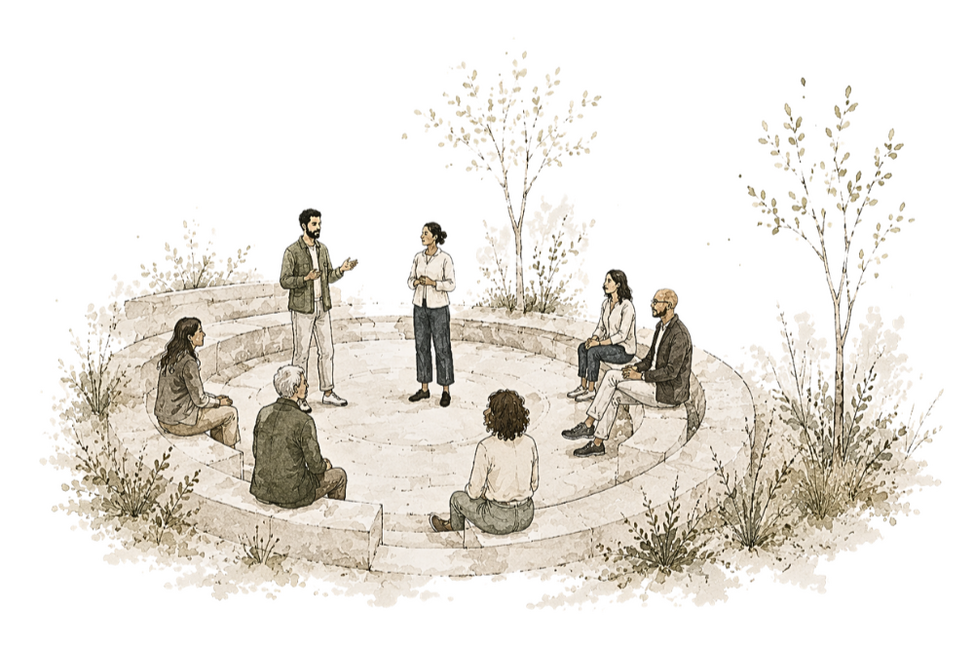
Oxford, UK
Friendly co-option proved harder to resist than open conflict.

Sao Paulo, Brazil
Power dynamics and structures that shape decisions become visible. Acting differently can change the constellation, and open new possibilities within real constraints.
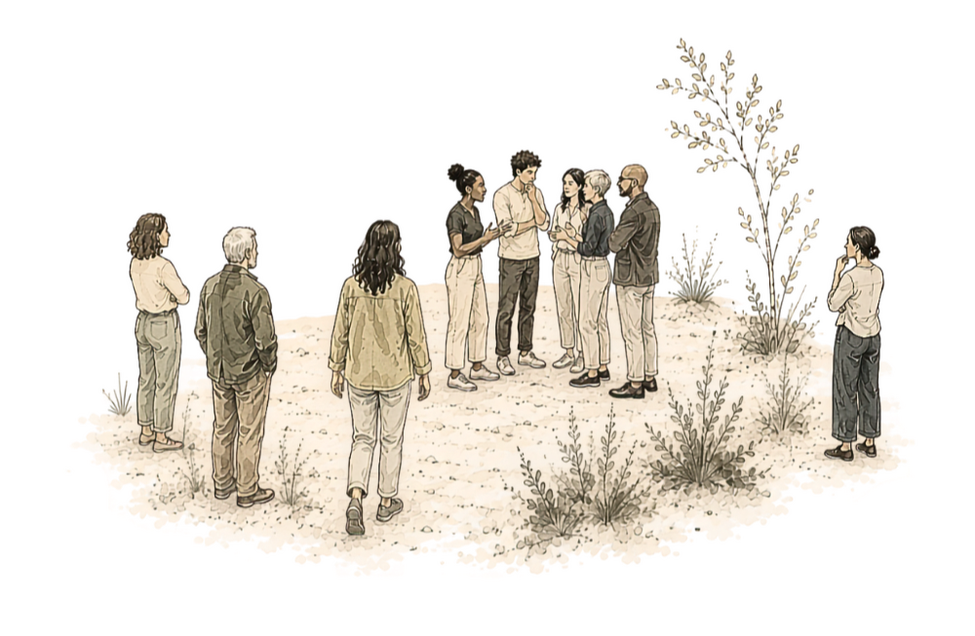
Coimbra, Portugal
Next to the emergent strategies and the collective intelligence surfaced through the rehearsal, participants also learn about alternatives that exist or are being built.

Sibiu, Romania
Many leave asking:"What's next?"
Field notes from the commons
A living commons of civic ingenuity
Every iteration leaves traces.The interventions people attempt. The tensions that repeatedly surface. The unexpected framings participants generate. The practical moves that feel possible afterwards.
These become part of a growing commons: a living record of civic ingenuity across contexts.Scenes, facilitation materials, and learnings are documented openly so that participants and partners can adapt, remix, and carry the protocol into their own communities and institutions.
Ways to engage
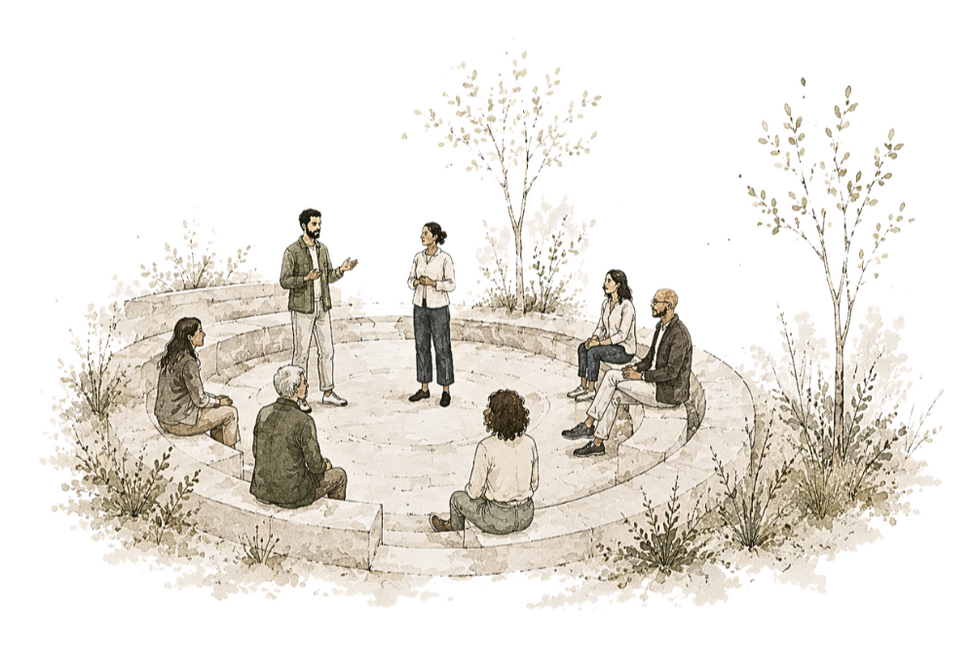
Experience
Join an upcoming public session and experience the protocol first-hand.

Host
Bring a facilitated Prometheus experience to your organisation, network, conference, or community.Together, we adapt the experience to your context and questions.
Adapt
Interested in carrying Prometheus into your own context?Practitioners interested in hosting local iterations can receive support to adapt scenes, prepare facilitation, and contribute learnings back into the commons.
Stewarding the commons
Rooted in place. Remixed everywhere.
Prometheus is held as an evolving commons.The protocol is designed to be adapted, remixed, and rooted in different places. Many materials, learnings, and field notes are shared openly.People interested in carrying the protocol into their own communities are invited into a growing steward ecology.
Stewards contribute in different ways:• adapting the protocol to local realities
• documenting what emerges
• sharing learnings back into the commons
• supporting future iterationsFinancial contributions, when possible, help sustain the continued development, documentation, and accessibility of the practice.

Live experiments for collective agency. Rooted in place, remixed everywhere.
Behind the practice
Stewarded by Alexandra Stef, based in Madrid and working internationally.Working languages: English, Spanish, Romanian.
Finding the others
An ecology of experimenters
Across different places and fields, people are searching for ways to act under conditions of uncertainty.Some are building community wealth. Others are exploring democratic innovation, local resilience, alternative infrastructures, and new forms of collective life.Collective Futures is one small node in this wider ecology.Part of this practice is helping experimenters find one another so that practices, protocols, and possibilities can move and evolve, and inspire new experiments elsewhere.The ambition is not to build a single organisation, but to contribute to a distributed field of collective experimentation.If you are exploring related questions, I'd love to connect.


Join in
Ways to participate
This practice is an invitation to discover ways forward by imagining, making, and trying things together.
Field notes

Live experiments for collective agency. Rooted in place, remixed everywhere.
Behind the practice
Stewarded by Alexandra Stef, based in Madrid and working internationally.Working languages: English, Spanish, Romanian.
A question we're carrying
Which practices become meaningful enough that communities choose to carry them forward?
If that's a question you're exploring too, we'd love to continue the conversation.
Continue the inquiry
Explore how the practice works
Principles • Experiments • Rehearsals

Working together
Every collaboration begins with a question
Collective Futures works with communities, foundations, networks, public institutions, researchers, artists, and civic organisations who are exploring questions that don't yet have clear answers.Some collaborations last a morning.Others unfold over months.Rather than offering fixed programmes, we shape each collaboration around the question, place, and people involved.

How small beginnings grow
We start with a question, not a programme
Some experiments remain small. Others grow into longer collaborations, new practices, or new infrastructure.
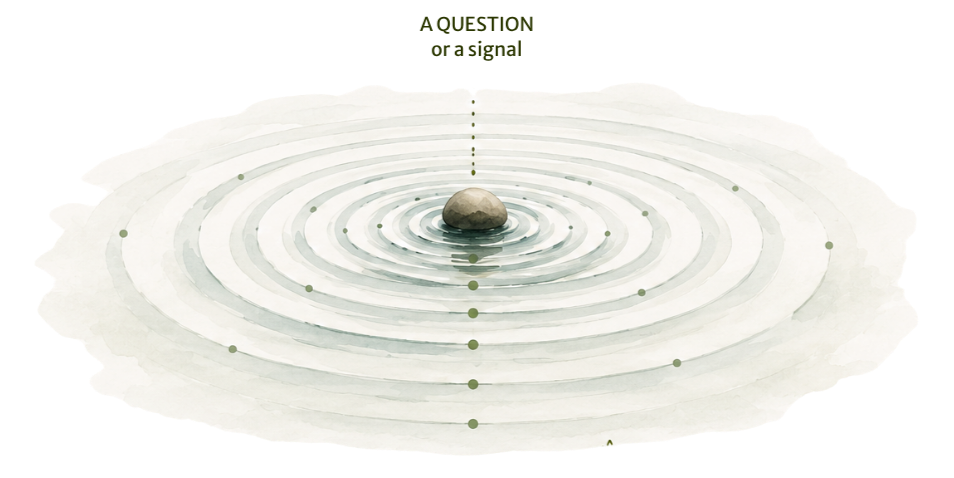
What begins as a small experiment can ripple far beyond where it starts.
Who this practice is for
Different contexts, shared question
This work is for groups, communities, networks, institutions and individuals who bring others together around a question that matters, and are looking for ways to move beyond conversation into shared experimentation.
Beneath the differences, the same curiosity:
What kinds of practices help people discover new ways of acting together?
Selected collaborations
Evolution of Community Foundations Huddle
A six-month global learning journey bringing together practitioners from 12 countries to explore the future roles of community foundations.
Explore →

Evolution of Community Foundations Huddle
A six-month global learning journey bringing together practitioners from 12 countries to explore the future roles of community foundations.
Explore →
Evolution of Community Foundations Huddle
A six-month global learning journey bringing together practitioners from 12 countries to explore the future roles of community foundations.
Explore →
Stewarding the practice
About Alexandra
I'm Alexandra Stef, steward and designer of Collective Futures.Over the past fifteen years, I've worked across community organising, philanthropy infrastructure, collective learning and participatory futures, collaborating with communities, foundations, universities, networks, and public institutions in Europe and beyond.Collective Futures brings those experiences into one evolving practice, developed through experiments, partnerships, and collaborations with people exploring similar questions in different places.Based in Madrid, working internationally.
Let's continue the conversation
Carrying a question, a transition, or the beginning of an idea?
Let's think together about a first experiment.

Continue
the inquiry
Inside the Practice
Explore how it works →
Experiments
See the practice in action →
Work Together
Bring it to your place →
Find the Others
Meet experimenters →

Live experiments for collective agency. Rooted in place, remixed everywhere.
Stewarding the practice
Stewarded by Alexandra Stef, based in Madrid and working internationally.Working languages: English, Spanish, Romanian.
Care & policies
A few notes on how this website works
How we care for your information and how we hope our work here is shared.Last updated: July 2026.

We'll start with ours
We collect as little information as possible.
Collective Futures explores how people imagine, rehearse and build new possibilities together.We hope this website reflects those same values.If anything here feels unclear, we'd much rather hear from you than hide the answer behind legal language.You can always reach us at [email protected]
01 • Privacy
We only collect personal information when you choose to share it with us.At the moment, that means:
• subscribing to our newsletter
• sending us an emailIf you subscribe, we'll only store your email address and any information you choose to provide.
We use that information to send occasional updates about experiments, reflections, resources, and invitations connected to Collective Futures.You can unsubscribe at any time using the link included in every email.We don't sell personal information, build advertising profiles, or share your information for marketing purposes.
02 • The tools we use
We've chosen a small number of services that help us keep this website simple.Currently these include:• Carrd for hosting the website
• Buttondown for the newsletter
• Notion for some shared resources
• Miro for collaborative spaces
Some of these services may collect technical information when you interact with embedded content. Their use of your information is governed by their own privacy policies.Whenever possible, we choose tools that are lightweight, independent, and respectful of privacy.
03 • Cookies
We aim to use as few cookies as possible.Where the website relies on cookies that are necessary for it to function, they are used only for that purpose.
Some third-party services we link to or embed, such as collaborative spaces or shared documents, may use their own cookies according to their own policies.As this website evolves, we'll keep this page updated to reflect any changes.
04 • Sharing our work
Collective Futures exists because people have generously shared ideas, practices and questions before us.We hope to contribute in the same spirit.Unless a resource states otherwise, you're welcome to:• share links to our work
• quote short excerpts with attribution
• reference or discuss our ideas in your own work
Some resources may eventually be released under open licences. Where that's the case, the licence will be clearly indicated.If you'd like to adapt something we've created, we'd genuinely enjoy hearing where it travels.
05 • A small disclaimer
We do our best to keep everything on this website accurate and up to date.That said, ideas evolve, experiments change, and mistakes occasionally happen.
Nothing on this website should be considered professional legal, financial or technical advice.
06 • Looking after your information
If you'd like to:• access the personal information we hold about you,
• correct it,
• delete it,
• or simply ask a question
Please write to:
[email protected]We'll do our best to respond promptly.
07 • Thank you
If you've read this far, thank you.The internet often asks us to accept pages we never read. We'd rather create something worth reading, even here.
We hope this small corner of the web feels welcoming, respectful, and useful.
Inside the practice
Why experiments
Designing conditions
From roots to systems
Prometheus Protocol
Living Commons
Case studies
Field notes
Open protocols
What we're learning
Host an experiment
Growing the commons
Ways in
Who we work with
Stewarding the practice
Past collaborations
Built with care in Europe.
© 2026 Collective Futures

About Collective Futures
A practice for collective experimentation
Collective Futures designs repeatable practices where communities, networks, and institutions discover new ways of acting together.Rather than delivering answers, the work creates opportunities for people to experience, test, and adapt new ways forward, starting from what already exists: relationships, local knowledge, and a willingness to try.Each practice is designed to travel. It begins in a particular place and evolves as others make it their own.Over time, people begin to experience themselves as capable of shaping the futures they share.
Why this work exists
Many of the challenges shaping our time arrive without instructions.Ecological breakdown, wealth concentration, democratic erosion, artificial intelligence, loneliness.We are entering territories for which no institution, expert, or roadmap is prepared.And yet decisions are being made every day.About what children learn.
About who benefits from technology.
About what is automated.
About whose voices count.
About how we live together.Collective Futures begins from a simple observation:People discover what they can do together only after they begin.Not after another report, perfect alignment, or ideal conditions, but after they begin.This practice exists to create conditions for that beginning.Places where people can rehearse the future, test possibilities, improvise together, and learn in public.Because futures are not only anticipated, but practised into being.

Why rehearse the future?
Many of the capacities this moment asks of us cannot be acquired through analysis alone.Trust. Imagination. Courage. Collective agency. The ability to move through uncertainty together.These capacities grow through practice.By trying something.
By noticing what happens.
By adapting.
By beginning again.Collective Futures treats experimentation as a form of civic practice: a way of learning with others, under real conditions, before certainty arrives.
A working hypothesis
What if collective agency grows through practice?
We believe collective agency doesn't emerge from better ideas alone. It grows through shared experiences that people can repeat, adapt, and carry into everyday life.
We believe lasting change doesn't begin with better plans alone. It begins when people experience new ways of relating, deciding, and acting together. Practice creates experience. Experience builds confidence. Confidence becomes collective agency.
Most efforts to create change begin with ideas, plans, or policies.Our work explores a different possibility:What if lasting change begins by creating opportunities for people to experience new ways of relating, deciding, and acting together?Every practice is an experiment in that question.
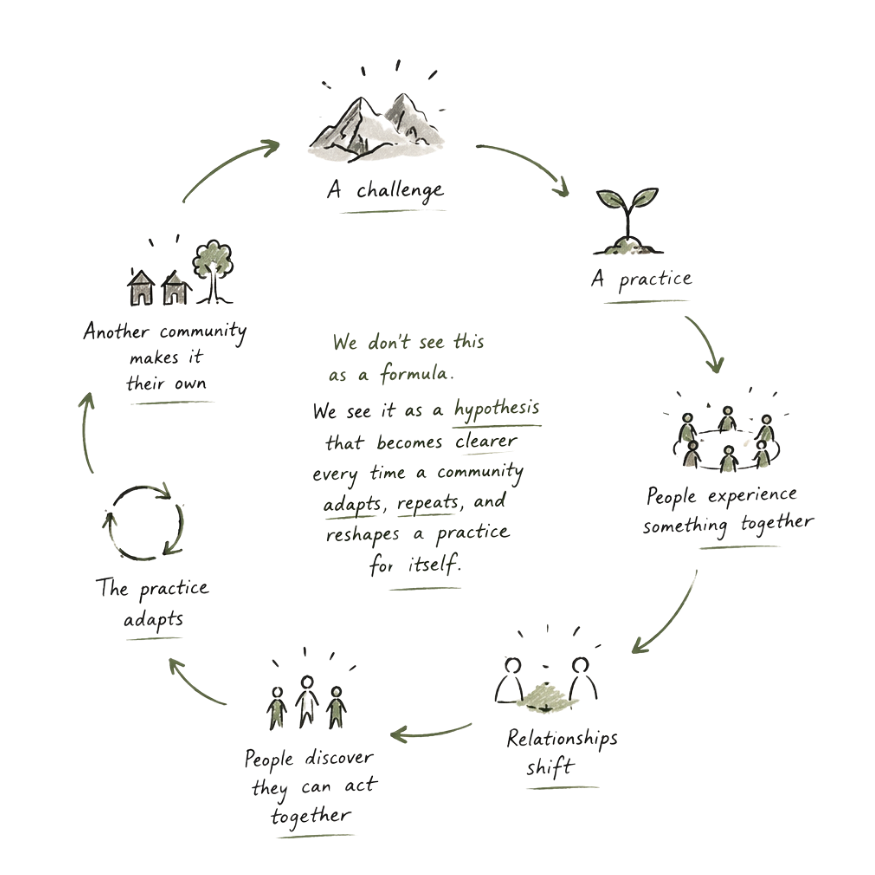
We don't see this as a formula.We see it as a hypothesis that becomes clearer every time a community adapts, repeats, and reshapes a practice for itself.
What working together can look like
Questions evolve.
So do collaborations.
Some begin with a single gathering. Others continue over weeks or months. There is no fixed pathway.These are some of the forms collective experimentation can take as it deepens.

First experience
90 minutes to ½ day
An immersive experience that surfaces what is already in the room and one meaningful next move.
Sprint
1 day to 1 week
Focused bursts of experimentation designed around a shared challenge or opportunity. Turns overlooked assets, relationships, and ideas into visible action: a first signal that something new is possible.
Practice Cycle
3 to 9 weeks
Structured loops of testing, reflection, and adaptation that allow learning to become repeated practice.

Field Lab
6 to 12 months
A sustained space where experimentation builds working relationships, shared capacity, and new ways of organising.
How the work unfolds
From first experience to new infrastructure
Questions evolve. So do collaborations.Some begin with a single gathering. Others continue over months or years. There is no fixed pathway.These are some of the forms collective experimentation can take as it deepens.
First experience
90 minutes to ½ day
A participatory experience that surfaces what is already in the room and one concrete next move.
Sprint
1 day to 1 week
Turns overlooked assets, relationships, and ideas into visible action: a first signal that something new is possible.
Practice Cycle
3 to 9 weeks
Structured loops of testing, reflection, and adaptation until insight becomes repeated practice.
Field Lab
6 to 12 months
A sustained space where experimentation builds working relationships, collective capacity, and new ways of organising.

First experience
90 minutes to ½ day
An immersive experience that surfaces what is already in the room and one meaningful next move.
Sprint
1 day to 1 week
Focused bursts of experimentation designed around a shared challenge or opportunity. Turns overlooked assets, relationships, and ideas into visible action: a first signal that something new is possible.
Practice Cycle
3 to 9 weeks
Structured loops of testing, reflection, and adaptation that allow learning to become repeated practice.

Field Lab
6 to 18 months
A sustained space where experimentation builds working relationships, shared capacity, and new ways of organising.
Ways of working together
Ways of working together
How this work is held
Stewarding a living practice
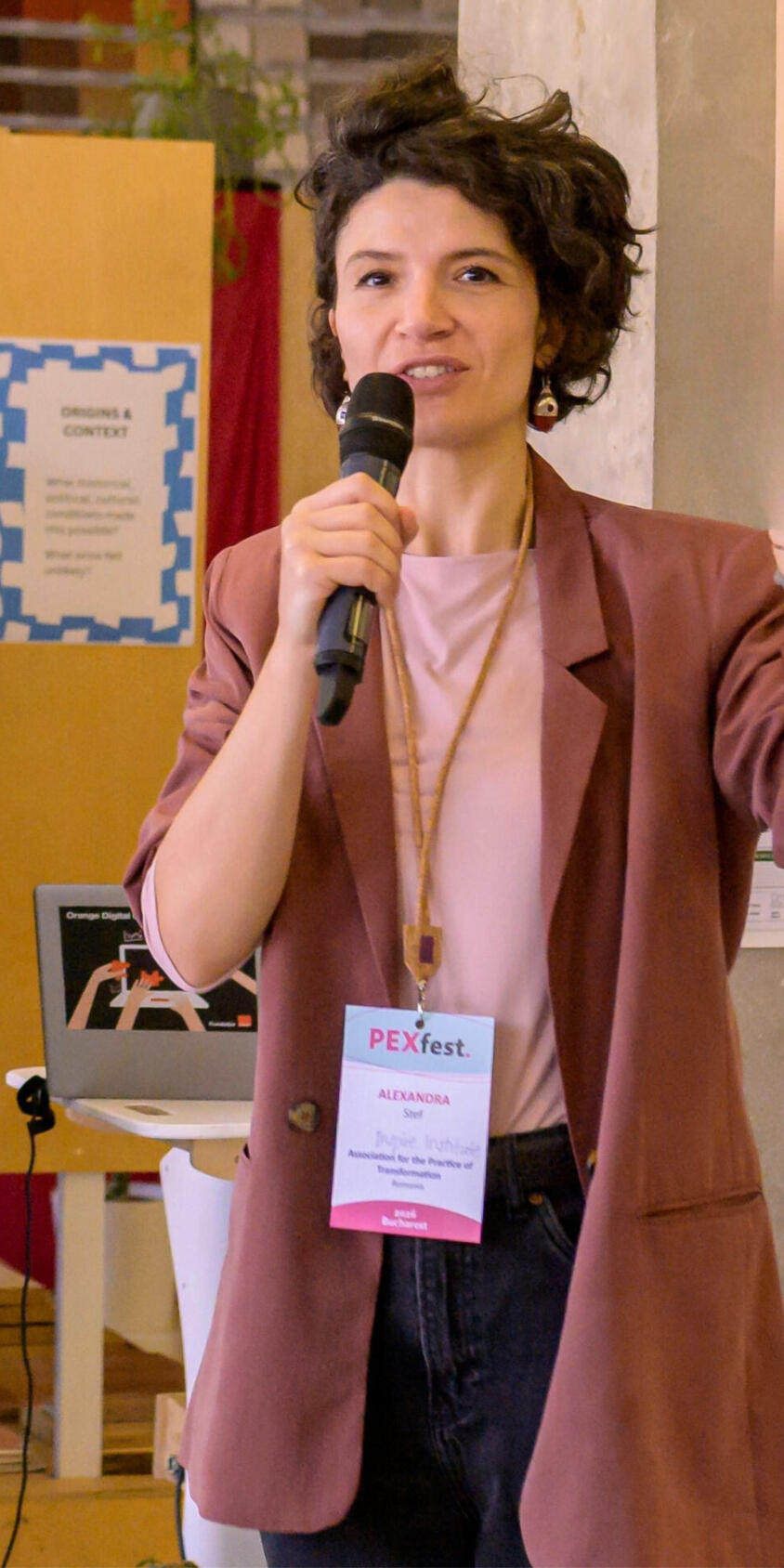
I'm Alexandra Stef, designer and steward of Collective Futures.Collective Futures is both a personal practice and an emerging commons.My role is to design, host, document, and steward conditions in which people, communities, and institutions can discover new possibilities together.Sometimes this means designing an experiment. Sometimes accompanying a longer inquiry. Sometimes supporting communities, foundations, or networks interested in cultivating their own capacity for collective experimentation.The practice grows through participation and stewardship. Hosts bring experiments into their communities. Participants carry experiences into future conversations and initiatives. Contributors adapt, document, and extend the work.If you're wondering what this could look like in your context, let's talk.
Collective Sensemaking & ForesightFor communities, networks, and organisations navigating uncertainty.When old assumptions no longer hold, people need spaces to make sense of what is changing together.Collective Futures designs participatory processes that help groups surface diverse perspectives, explore emerging signals, develop shared understanding, and identify meaningful next moves.This may involve:→ participatory foresight
→ ecosystem inquiry
→ collective reflection
→ community listening
→ facilitated sensemaking processes🌊 We need to make sense of change together
When old assumptions no longer hold.Notice what is changing. Surface different perspectives. Develop shared understanding in conditions of uncertainty.This may involve participatory foresight, ecosystem inquiry, community listening, or facilitated collective sensemaking.
🔥 We want to rehearse possible futures
When decisions need to be experienced, not only discussed.Step into possible futures. Explore tensions. Experience alternatives before decisions become irreversible.This may involve simulations, civic rehearsals, role-play, forum theatre, games, experiential learning or live future scenarios.
🕸 Strengthen relationships for action / 🕸 We want to strengthen our capacity to act togetherWhen relationships, trust, and collaboration need to deepen.Discover existing strengths, connect people, and create the conditions for sustained collaboration.This may involve learning journeys, communities of practice, experimentation cycles, network weaving, or collective inquiry.
🌱 We want to try something newWhen emerging challenges require experimentation rather than predetermined solutions.Move from ideas to action through small, concrete experiments that generate learning.This may involve sprints, prototyping processes, civic experiments, rapid learning cycles, or participatory design.
🌾 We want learning to travelWhen isolated initiatives need to become shared practice.Document what emerges, connect experiments across places, and help practices travel without becoming blueprints.This may involve convening, documentation, field-building, convening practitioners, developing open protocols or shared learning infrastructure.
Which path are you curious to enter?
Some people arrive here because they are searching for a different way of thinking about change.Others, because they want to begin experimenting in their own context. Choose your path, or wander between them.
The Commons
Carrying the practice together
Collective Futures is interested in creating practices that can be carried, adapted, and recreated.Some protocols are openly shared. Others are developed collaboratively and continue evolving through use.The intention is not replication, but recreation: carrying principles into new contexts and making them your own.The commons is still emerging. Some parts already exist. Others are being built together.
If you're wondering...

Live experiments for collective agency. Rooted in place, remixed everywhere.
Behind the practice
Stewarded by Alexandra Stef, based in Madrid and working internationally.Working languages: English, Spanish, Romanian.